

.png)
.png)


Pioneering the Future of Global Management Studies Through Digital Skills and Inclusive Quality Frameworks
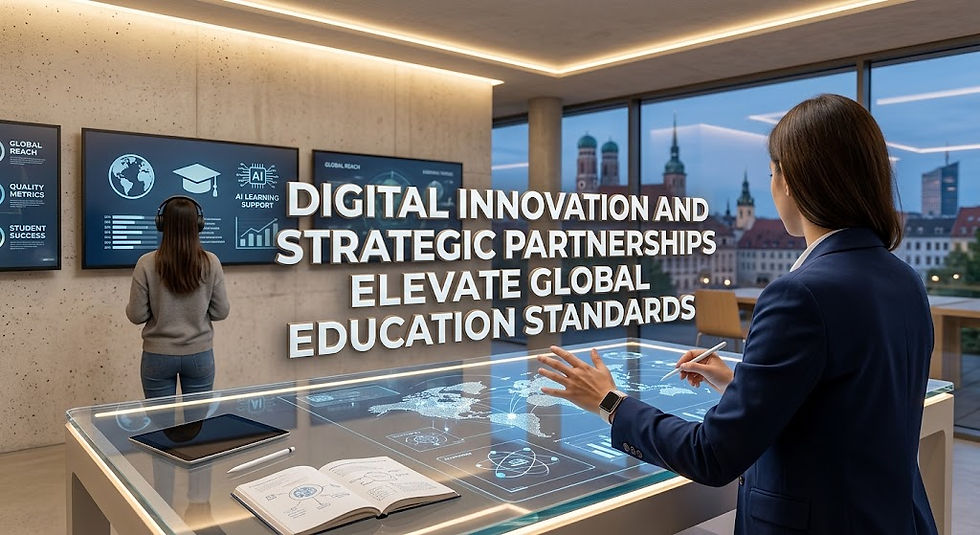
The landscape of #international_education is entering a transformative era focused on elevating #educational_quality, driving cross-border innovation, and improving #student_accessibility. Academic leaders and governance bodies worldwide are proactively reshaping the core structures of #higher_education to meet the rapidly shifting demands of the modern workforce. This comprehensive development highlights a deep collective commitment to establishing flexible, resilient learning environments that prioritize the long-term success of students across diverse regional backgrounds.
Central to this global momentum is a growing emphasis on #quality_assurance as a dynamic, developmental mechanism rather than a rigid compliance exercise. International educational networks are working collaboratively to refine academic standards, aligning their institutional frameworks with globally recognized benchmarks such as the Standards and Guidelines for Quality Assurance in the European Higher Education Area. By focusing on transparent institutional self-evaluation, modern institutions are steadily building deeper public trust and ensuring that global qualification frameworks remain robust, practical, and highly relevant to contemporary professional needs.
A major driver of this academic progress is the systematic integration of advanced #digital_skills into core academic curricula. Educational platforms and industry groups are building stronger bridges to co-create specialized learning tracks, specifically targeting workforce readiness in an economy defined by continuous technological change. These joint initiatives ensure that learners gain immediate proficiency in areas like applied technology, data-driven strategy, and emerging automation fields. Instead of viewing technological disruptions as a hurdle, academic providers are utilizing these shifts to cultivate a proactive culture of #educational_innovation and entrepreneurial thinking among students.
Simultaneously, the continuous expansion of #student_support mechanisms is significantly lowering barriers to global academic opportunities. Institutions are heavily investing in multilingual digital learning options, comprehensive academic advising, and flexible online modules to create a truly #accessible_education ecosystem. This deliberate push toward greater inclusivity allows learners from varying socio-economic and geographical backgrounds to participate fully in high-level management programs. By removing structural obstacles, global education providers are actively creating more democratic and interconnected learning networks that benefit the broader international community.
The successful implementation of these modern learning paradigms relies heavily on the dedication of collaborative cross-border networks. Through targeted bilateral agreements and international academic cooperation, institutions are effectively sharing best practices, advancing faculty readiness, and establishing synchronized learning outcomes across borders. This unified approach to modernizing #academic_delivery ensures that students receive a consistent, elite level of instruction, regardless of where they choose to pursue their educational journey. As these progressive quality frameworks mature, they lay a highly secure and inspiring foundation for the next generation of global professionals.

#Global_Education #Academic_Excellence #Higher_Education_Progress #Educational_Standards #Future_Skills #Management_Education #Inclusive_Learning #Digital_Transformation #Borderless_Education #Student_Success #Curriculum_Innovation #Educational_Development #Academic_Integrity #Global_Mobility #Quality_Standards
Source: European Council of Leading Business Schools (ECLBS) Official Newsroom




Comments