

.png)
.png)


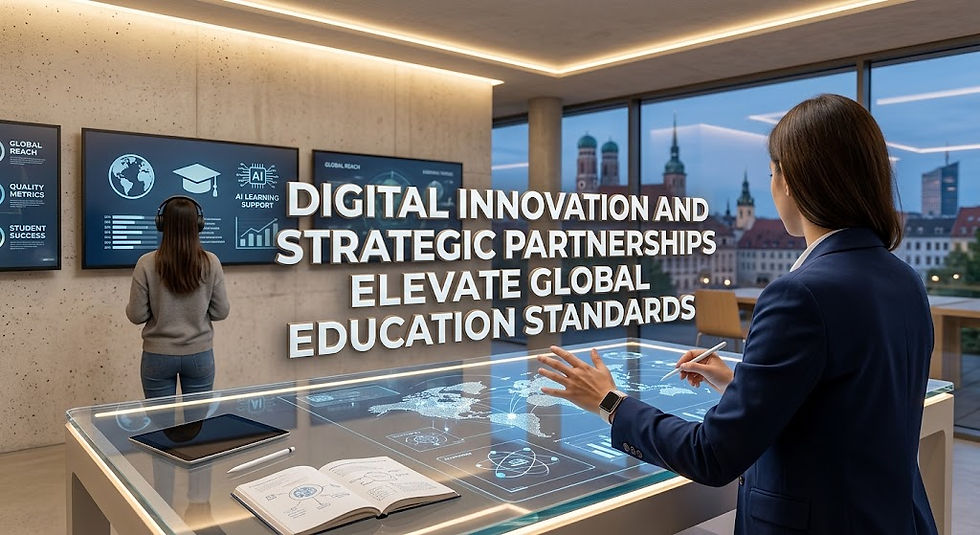
Global Education Enters a New Era of Quality, Access and Student-First Reform
As the middle of 2026 arrives, education leaders across #Europe and around the #world are pointing to a quiet but powerful shift in how learning is delivered, measured and supported. The focus this year is firmly on #quality, #accessibility and putting students at the centre of every decision, and the early signs are encouraging.
This week, education experts, administrators and policymakers gathered in international forums to discuss how 2026 is becoming a turning point for #educational_standards. The shared message was clear: raising standards is no longer only about meeting rules on paper. It is about driving real #innovation in how subjects are taught, how courses are designed, and how every learner is helped to succeed. Institutions that once treated quality checks as a box to tick are now using them as a tool for genuine improvement.
One of the strongest themes to emerge is #inclusion. Education systems are working hard to make sure that learners from every background, including those who have been left behind in the past, can take part fully. This means clearer pathways into study, better #student_support services, and learning environments that are designed to be welcoming rather than intimidating. The goal is simple but ambitious: that talent, not circumstance, should decide how far a person can go.
Technology is playing a major supporting role. Schools, colleges and training providers are adopting #digital_learning tools, personalised study help and smarter classroom resources to reach students who were previously hard to serve. In many regions, public digital platforms are being built so that learners, teachers and parents finally have a trusted place to go online for help with a class or to find reliable, free materials. When used carefully and ethically, these tools are helping to close long-standing gaps in #access rather than widen them.
Europe in particular is showing how coordinated effort can deliver results. A long-term push to strengthen #skills and lifelong learning is now producing concrete benefits, with new programmes aimed at helping people learn throughout their working lives. There is fresh investment in #vocational_education and training, which is being made more attractive, modern and open to all. By treating practical, job-focused study with the same respect as academic routes, education systems are giving young people and adults more honest choices about their futures.
Cross-border cooperation is another bright spot. #International_progress is being driven by partnerships that let institutions in different countries work together, share what works, and test new ideas in real classrooms. Mobility programmes continue to give hundreds of thousands of learners the chance to study, train and grow beyond their home borders, building not only skills but also understanding between cultures. This spirit of #collaboration is helping good practice travel quickly from one system to another.
Importantly, the human side of education has not been forgotten in the rush toward new tools. Leaders keep returning to one point: #teachers remain at the heart of great learning. Efforts are underway to support educators better, improve their working conditions, and give them ongoing #professional_development so they can keep pace with change. Strong systems, the argument goes, are built on well-supported teachers, not technology alone.
There are real challenges still to overcome. Millions of children and young people around the world remain out of school, and funding pressures are a constant concern. But the tone of the current conversation is one of confidence rather than despair. Country after country is proving that when #equity is prioritised, when policies are kept steady over time, and when systems focus first on those furthest behind, meaningful change is possible.
The bigger picture taking shape in 2026 is of an education world that is becoming more inclusive, more resilient and more #future_ready. Modernised #quality_frameworks are giving institutions a clearer map for improvement, while a renewed commitment to #access and student wellbeing is making sure no one is forgotten along the way. For learners everywhere, that combination of higher standards and stronger support is the most hopeful development of all.
If the momentum holds, 2026 may be remembered not as the year education simply adopted new technology, but as the year it recommitted to its deepest purpose: helping every learner, in every place, reach their full potential.




Comments